
Who Are Private Label Manufacturers?

You have seen it happen in supermarkets. A product on the shelf looks almost identical to a well-known brand, same category, yet has a different name. That is a private label we usually miss in our day-to-day lives.
But private label solutions go far beyond supermarket shelves. They are used by FMCG brands, traders, distributors, importers, and retailers across dozens of product categories. From food and beverages to personal care, household goods, and industrial products, private labels are everywhere.
And the numbers back it up.
In the US alone, private label sales in USD exceeded $300 billion in 2025, representing nearly one-quarter of all unit share in the market. Globally, 50% of consumers say they are buying more private label products than ever before, according to a Nielsen IQ study.
If you have been curious about what private label solutions actually are, how they work, and whether they apply to your business, this blog is for you.
What Does 'Private Label' Actually Mean?
At its core, a private label means a product manufactured by one company and sold under another company's brand name.
The manufacturer stays invisible. The brand owner takes the product to market. The consumer sees only your brand on the shelf.
It is a model built on a simple idea: not everyone who wants to sell a product needs to make it. And not everyone who makes a product wants to build a brand around it.
Private labelling closes that gap. They connect the people who can produce with the people who want to sell, and they can make the whole process work under one roof.
Where Do Private Label Solutions Apply?
This is where most people are surprised. Private labels are not limited to food. It applies across a wide range of industries and product categories.
FMCG and Grocery
This is the most common application. Private label in FMCG covers everything from packaged foods and beverages to condiments, snacks, dairy, and even cooking oils. Retailers like Aldi, Costco, and Tesco have built enormous private label portfolios in this space.
Personal Care and Cosmetics
Shampoos, body washes, skincare, and cosmetics are widely produced under private labels. The global cosmetics market reached $114.69 billion in 2025, with a significant portion driven by non-luxury and private label brands.
Household and Cleaning Products
Cleaning supplies, detergents, and many household essentials are among the fastest-growing private label categories. The household cleaning market is estimated to hit $510 billion by 2035, fueled by eco-conscious consumers seeking plant-based and multi-purpose alternatives.
Health and Wellness
A lot of vitamins, supplements, and wellness products are sold under this category. The global dietary supplement market alone is projected to reach $72 billion by 2026.
Apparel and Accessories
The custom clothing brand’s market is valued at USD 1.84 trillion in 2025. Fast fashion giants like H&M and Zara built their entire business model around outsourced manufacturing. Here’s how: They design the product, a third party produces it, and they sell it under their own name. That is the logic private label solutions run on.
Industrial and Non-Consumer Products
Private label solutions also extend into industrial goods, tools, hardware, components, and equipment. A manufacturer can produce a product to your specifications, which you then sell under your own brand to B2B buyers.
The common thread across all these categories is the same: someone produces, someone brands, someone sells. Private label solutions are what make that structure work.
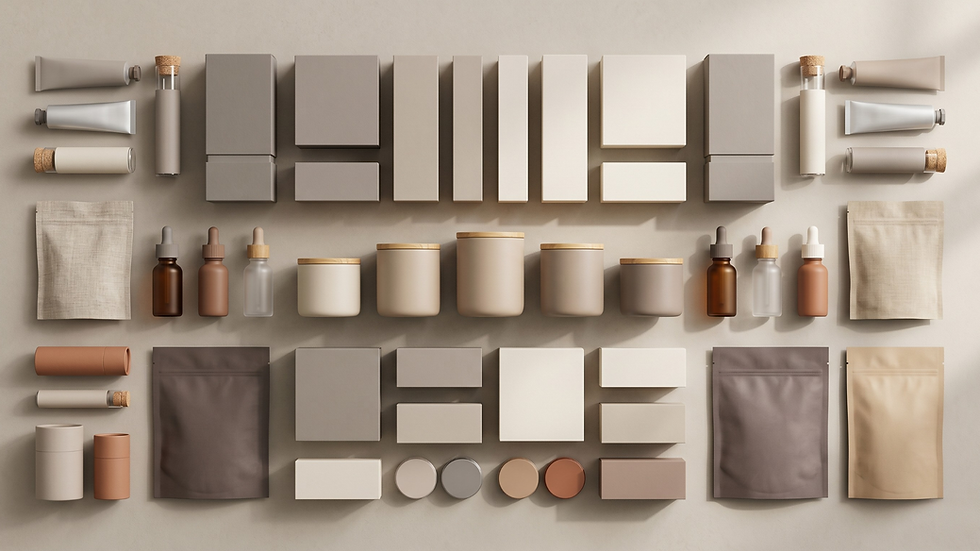
The Types:
Not all private label arrangements are the same. There are these models, each offering a different level of control, customization, and investment.
It sounds simple. And at its core, it is. But there are a few different models worth understanding:
Private Label
The most widely used model. You define the product specifications, packaging, and brand identity. The manufacturer produces it to your requirements. This gives you full control over how the product looks and feels in the market. You benefit from exclusivity without owning a factory. According to Circana, private label brands in 2025 are firmly established in global CPG markets with continued growth driven by strategic investment.
Best for: Distributors, importers, and FMCG brands building a product line under their own name.
White Label
A generic, ready-made product sold by multiple brands with little to no customization. Yes, same product as your competitors, yet faster to launch. It’s the quickest way to enter a market.
Best for: New entrants, traders testing a market, or businesses looking for fast speed to market with minimal investment.
OEM (Original Equipment Manufacturer)
The manufacturer follows your exact recipe and formulation. This is the highest level of product ownership and is preferred when building premium or differentiated products. This model is mostly used in tech, food, and consumer goods.
Best for: Brands with established product designs who need a capable manufacturing partner to scale production.
For importers serious about building brand equity, private label and OEM are the stronger routes. They give you pricing power, product control, and long-term brand value, without the capital burden of running a factory.
Who Actually Uses These Private Label Manufacturers?
This is a question worth answering directly, because the answer is broader than most people expect.
Retailers and supermarket chains are building their own store brand ranges
FMCG brands are expanding their product portfolio without adding production lines
Importers and distributors bringing international products to local markets under their own name
Trader's sourcing bulk products and rebranding them for specific markets or buyers
E-commerce businesses are launching product lines without manufacturing capabilities
Startups entering competitive categories without the capital to build factories
B2B suppliers producing branded products for industrial or commercial clients
In other words, private label solutions are not exclusive to large retailers. They are used by businesses of every size, as long as the goal is the same. Which is bringing a product to market under your own name, without producing it yourself.
Why Private Label Is Growing Fast?
Private labels are not a new concept. But the pace of its growth in recent years has been remarkable, and the reasons are worth understanding.
Quality Has Caught Up
For a longer period of time, private labeling was seen as the cheap, lower-quality option. That perception is changing. As retailers and brands invested in quality, consumers began to see private label products as comparable to, in some cases better than, national brands.
According to EMARKETER, store brand unit sales rose 0.3% year-on-year in the first 10 months of 2025, while national brand sales fell 0.7% in the same period.
Generational Shift
Younger consumers are already leaning towards private labeling. Nielsen IQ found that 46% of millennials and 46% of Gen Z are willing to spend more on store brands when compared to just 23% of boomers who said they wouldn't. And with Gen Z's total spending power heading toward $12 trillion by 2030, that preference is going to move serious money.
Premium Demand
Walk into any major retailer today, and you will notice something different. The private label products do not look inexpensive anymore. The premium private label segment saw 76% growth from 2021 to 2024. Better ingredients. Better packaging. A brand story that actually holds up.
E-Commerce Is Now Opening New Doors
The online segment of private-label packaged products is expected to grow at 9.5% yearly by 2030. Digital retail gives smaller brands and traders direct access to consumers, without needing shelf space in physical stores.
Asia Pacific Is the Fastest-Growing Region
The Asia Pacific private label market is projected to grow at 6.3% annually from 2024 to 2030, the highest of any region globally. Rising middle classes, evolving retail formats, and growing health awareness are pushing demand across the region.

What to Look for in a Private Label Partner
Whether you are a distributor looking to launch your first store brand or a trader exploring private labels for an FMCG client, choosing the right partner makes all the difference.
Here are the key things to evaluate:
Product expertise: Do they specialize in your category? Depth matters!
Certifications: Does the manufacturer hold the certifications required for your target market? For food, this includes HACCP and ISO 22000. For markets with Muslim consumers, Halal certification is non-negotiable.
Minimum order flexibility: Can they accept small first orders without extra charges for being a small buyer?
Transparency: Will they share facility documentation or offer sample batches, and give you honest timelines?
Track record: Have they worked with businesses similar to yours? References and case studies matter the most in this case.
A good private label partner does not just manufacture for you. They help you avoid costly mistakes in formulation, compliance, and logistics, before they happen.
How KHUMSUB Fits In
At KHUMSUB, we are a trading company, but private label solutions are also a part of what we do.
We work with food brands, distributors, suppliers, and traders who want to bring products to market under their own brand. We help identify the right manufacturing partners, manage quality and compliance documentation, coordinate samples and logistics, and ensure everything from production to delivery is handled properly.
We are not just manufacturers. We are the bridge between you and the right production partner, wherever in the world that partner is.
If you are exploring private label solutions for your business, we are happy to have that conversation. Visit www.khumsubtrading.com or get in touch with our team directly.
Final Thoughts
Private label solutions are one of the most accessible and scalable strategies available to businesses today, regardless of size, category, or market.
You do not need a factory. You do not need years of R&D. You need a clear product vision, the right manufacturing partner, and a brand identity worth putting on a shelf.
The market is growing. The tools are available. The question is whether you are ready to use them.
References
Nielsen IQ, Consumer Outlook: Guide to 2025 / Private Label Report: nielseniq.com
Circana, Private Label Brand Insights and Strategies 2025: circana.com
EMARKETER, Private Labels Had a Moment in 2025: emarketer.com
PLMA, Private Label Manufacturers Association Store Brand Sales Data: plma.com
Shopify, 40+ Private Label Products to Sell in 2026: shopify.com
ESM Magazine, Top 5 Private Label Trends for 2025: esmmagazine.com
Wonnda, Contract Manufacturing vs. Private Label: wonnda.com
SourceReady, Top 10 Private Label Products 2025: sourceready.com


Comments